English


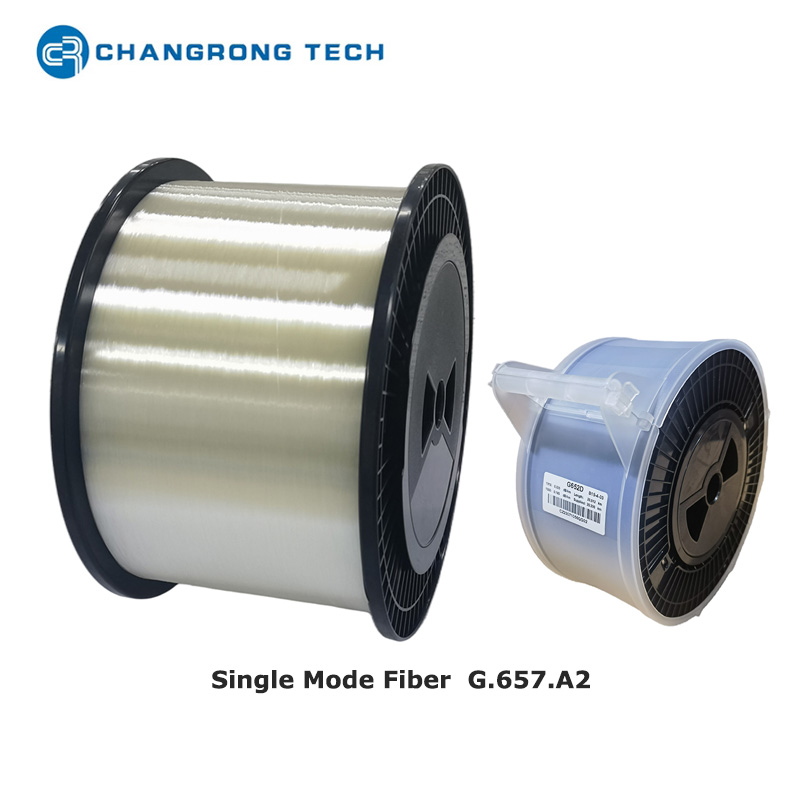




G657.A2 Bending Insensitive Single-Mode Optical Fiber
Description of Bending Insensitive Single Mode Fiber G657.A2:
G657.A2 is a type of bend-insensitive single-mode optical fiber (BIM-SMF) defined by the International Telecommunication Union (ITU-T) Recommendation G.657. It is specifically optimized for scenarios requiring tight bending (e.g., indoor cabling, home networks) while maintaining core single-mode transmission performance, making it a critical upgrade from traditional single-mode fibers (such as G652.D) in confined spaces.
G657.A2 belongs to the G.657.A category. The "A" category is designed for backward compatibility with traditional G652.D single-mode fibers—this means G657.A2 can be directly spliced or connected to G652.D fibers without significant signal loss.
Operating Window: Covers the three main communication bands:
O-band (1260–1360 nm): For short-range transmission (e.g., LANs)
C-band (1530–1565 nm): Core band for long-haul (e.g., backbone networks) and metro networks
L-band (1565–1625 nm): Extended band for high-capacity (e.g., dense wavelength division multiplexing, DWDM)
Mode Field Diameter (MFD): 8.6±0.4 μm @1310 nm and 9.7±0.6 μm @1550 nm (matched to G652.D, ensuring low splice loss between the two).
Attenuation: Typical values are ≤0.36 dB/km (1310 nm) and ≤0.22 dB/km (1550 nm)—comparable to G652.D, ensuring no performance degradation in straight-line transmission.
Internal Structure:
| Layer | Composition | Key Design for Bend Insensitivity |
| Core | High-purity silica glass doped with germanium (GeO₂) to increase refractive index. |
Thin core to maintain single-mode operation; refractive index profile optimized to trap light even when bent. |
| Cladding | Two sub-layers (inner and outer cladding):- Inner cladding: Silica with lower refractive index than the core.- Outer cladding: Special low-refractive-index material (e.g., fluorine-doped silica or polymer). |
The low-index outer cladding acts as a "light barrier": when the fiber is bent, it suppresses the leakage of evanescent waves (a major cause of bend loss). |
| Coating | Dual-layer UV-curable acrylate (primary + secondary coating). |
Primary coating: Reduces microbending loss (loss from tiny, random bends).Secondary coating: Provides mechanical protection (abrasion resistance, flexibility). |
Features of Single Mode Fiber G657.A2:
At 1550 nm: Bend loss ≤0.03 dB/turn when bent around a 30 mm diameter mandrel (10 turn).
At 1625 nm: Bend loss ≤0.1 dB/turn when bent around a 30 mm diameter mandrel (10 turn).
In contrast, traditional G652.D fibers suffer ≥1 dB/turn at 1550 nm with a 30 mm mandrel—making them unsuitable for tight bends (e.g., inside wall cavities or small patch panels).
Splice Loss: ≤0.1 dB when spliced to G652.D (using standard fusion splicers), eliminating the need for special equipment.
Interoperability: Can be integrated into existing G652.D-based networks (e.g., telecom backbones, enterprise LANs) without replacing entire infrastructure.
Attenuation: Same as G652.D (≤0.36 dB/km at 1310 nm, ≤0.22 dB/km at 1550 nm), ensuring long transmission distances (up to 10 km for FTTH, 80 km+ for metro networks).
Bandwidth: Supports single-mode transmission, enabling ultra-high bandwidth (up to 100 Gbps per channel, or terabits per second with DWDM)—ideal for 5G, cloud computing, and 8K video.
The dual-layer acrylate coating and thin jacket (common in indoor cables) make it highly flexible, allowing easy routing through narrow spaces (e.g., under floors, inside conduits).
Resistant to microbending loss (from vibration or pressure), ensuring stable performance in harsh indoor environments (e.g., data centers with high rack density).
Eliminating the need for large bending radii (saving space and installation time).
Avoiding rework or cable replacement in existing networks.
Use Case: Routing fiber from the building’s distribution point to individual apartments or homes.
Why G657.A2: Fits through narrow wall cavities, under baseboards, or inside small optical boxes (ONT/ONU). Its bend resistance prevents signal loss when routed around corners.
Use Case: Connecting servers, storage arrays, and switches in high-density racks; linking data center floors or buildings.
Why G657.A2: Tight bends in patch panels or cable management arms do not degrade performance. Supports 10G/40G/100G Ethernet for high-speed data transfer.
Use Case: Backbone cabling for offices, hotels, or smart homes (e.g., connecting security cameras, IPTV, and Wi-Fi 6/7 access points).
Why G657.A2: Flame-retardant jackets (e.g., LSZH—Low Smoke Zero Halogen) meet indoor safety standards. Its flexibility simplifies installation in crowded ceilings or walls.
Use Case: Connecting 5G small cells (deployed on lampposts, building exteriors) to core networks; DAS for indoor coverage (airports, malls).
Why G657.A2: Small form factor and bend resistance allow installation in limited outdoor/indoor spaces. Compatible with existing G652.D backbones.
Use Case: High-speed communication between industrial sensors, controllers, and cloud platforms (factories, warehouses).
Why G657.A2: Resistant to mechanical stress (vibration, temperature changes) and tight bends in industrial enclosures. Supports low-latency, high-reliability transmission.
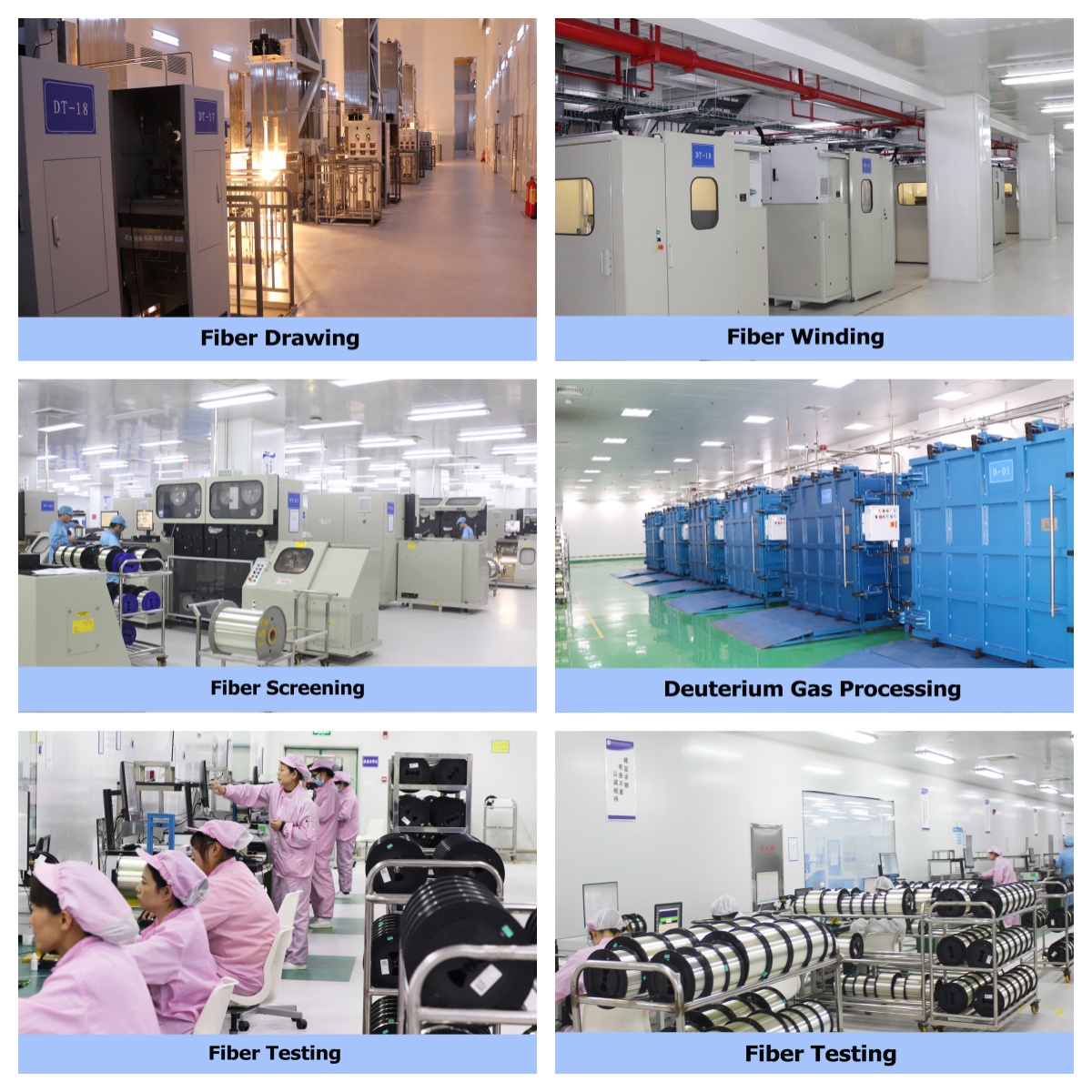
Changrong's Fiber Workshop View:
9 Fiber Drawing Towers ( 2 lines/Tower, totally 18 Production Lines)
Annual Output 15,000,000 kilometers
Full Sets of Cutting-edge Testing Equipment
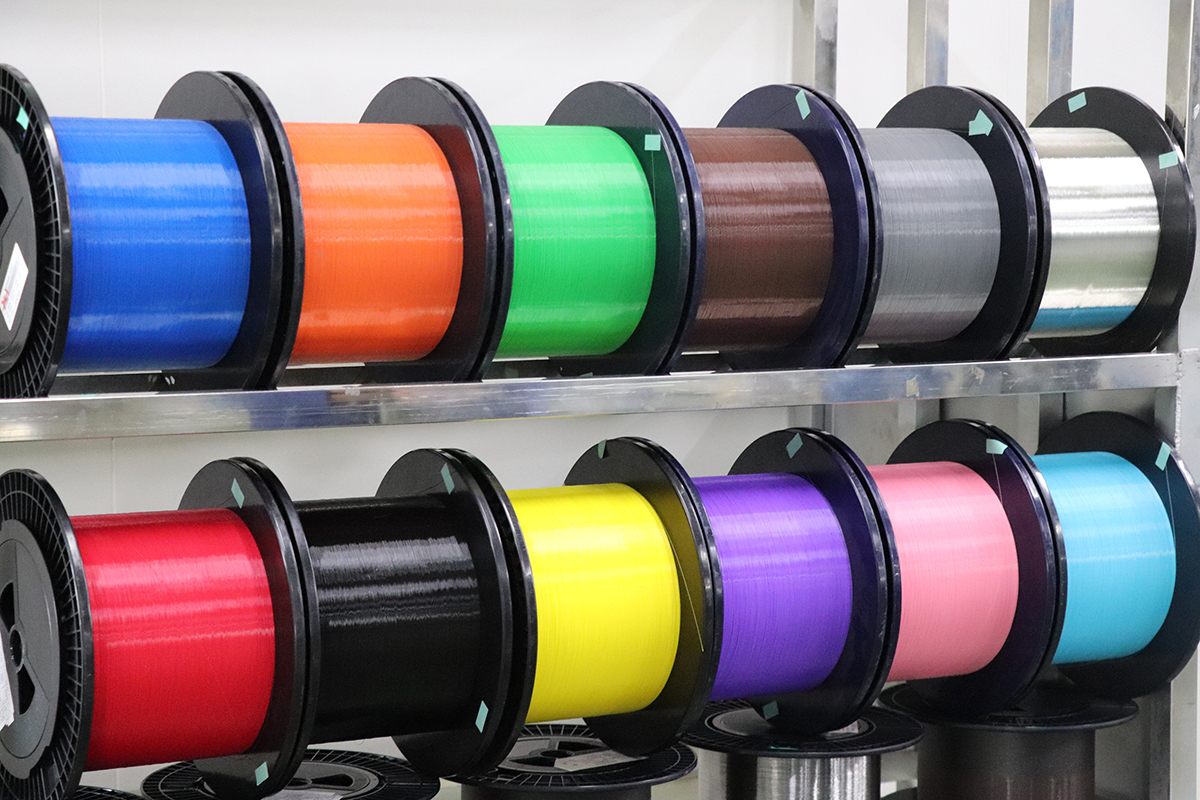
Colored Fiber:
Fiber Stock:
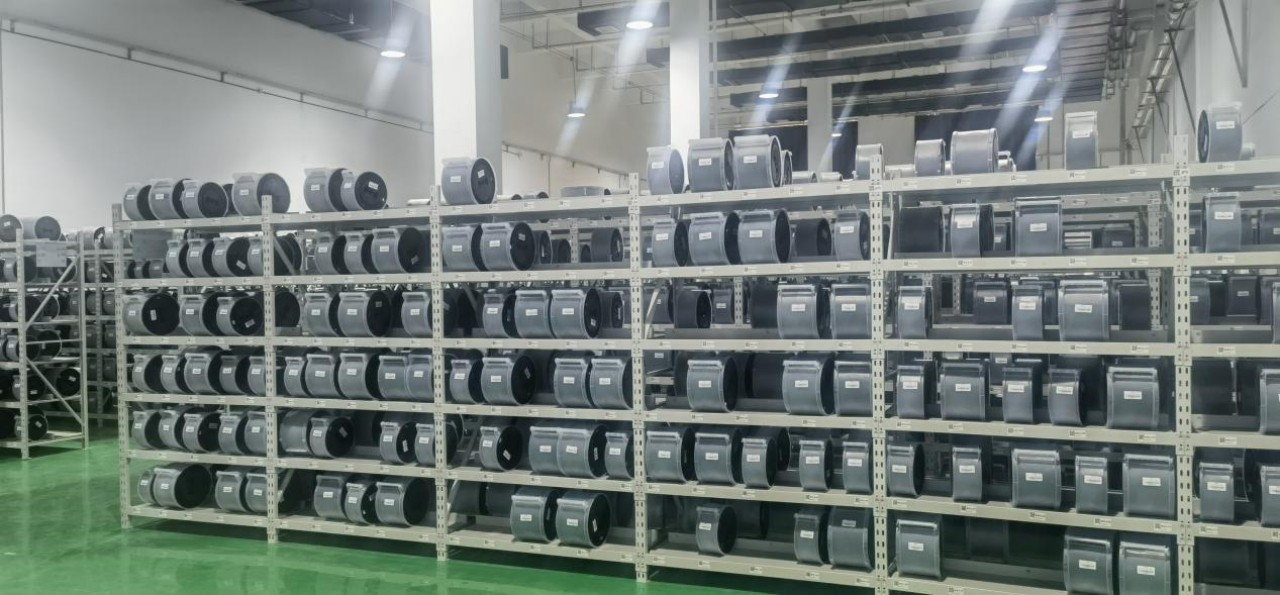
Reel Length:
Normally Standard 24.4 km, 48.8 km, 50.4 km per reel
Package:
for reel length 24.4km: 10 reels per carton box packed on pallets;
for reel length 48.8km and 50.4km: 5 reels or 6 reels per carton box packed on pallets.

Shipping Pictures:


