English


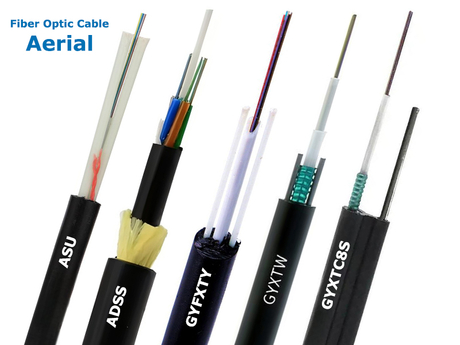
The Mini ADSS ASU (Aerial Self-Supporting Unitube) Fiber Optic Cable is a compact, lightweight, and cost-effective solution designed for shorter aerial spans, typically in last-mile or distribution segments of Fiber-to-the-Home (FTTH) and other access networks. Characterized by its small diameter and minimal weight, this cable retains the core ADSS principle of being All-Dielectric and Self-Supporting, making it safe for deployment near power lines. It features a simple, robust design often with a loose tube fiber unit protected by a single, durable jacket (usually medium or high-density polyethylene MDPE/HDPE). Available in low to moderate fiber counts (4, 6, 8, 12, 24 fibers) and rated for spans up to 80 meters, 100meters or 120 meters depending on the specific variant, it's ideal for connecting distribution points to individual homes/buildings or for deployment within aerial microducts.
| Model | ASU (Mini ADSS) | |||||
| Fiber Type | G652.D | |||||
| Fiber Counts | 1-12 | 24 | ||||
| Span | 80 m | 100 m | 120 m | 80 m | 100 m | 120 m |
| Cable Diameter (mm) | 6.6 | 7.2 | 7.6 | 7.0 | 7.7 | 8.2 |
| Cable Weight (Kg/km) | 45 | 50 | 62 | 49 | 57 | 65 |
| Tensile (N) | 1500N | 1800N | 2000N | 1500N | 1800N | 2000N |
| Crush (N/100mm) | 2000N | |||||
| Min. Bending Radius (mm) | Static/Dynamic: 10D/20D | |||||
| Temperature (℃) | Storage/Operation: -40℃~+70℃ | |||||

ASU Cable Cross Section

ASU Cable
ASU aerial self-supporting unitube fiber optic cable is a specialized overhead transmission cable. Its structure is as follows:
Fiber Core Unit: It usually contains 2 to 24 optical fibers, which are placed in a loose tube made of polybutylene terephthalate (PBT). The tube is filled with a gel compound to provide protection for the optical fibers, preventing them from being affected by mechanical stress and moisture.
Strength Members: Two fiber-reinforced plastic (FRP) elements are placed on both sides of the loose tube. FRP has high tensile strength, which can bear the weight of the cable itself and the external mechanical load, such as wind and ice, and ensure that the cable will not be broken under tension.
Water-blocking Layer: Water-blocking yarn is filled around the cable core composed of the loose tube and FRP to keep the cable waterproof and prevent water from entering the interior of the cable and affecting the performance of the optical fibers.
Outer Sheath: A polyethylene (PE) sheath is extruded outside the cable core. The outer sheath has functions such as protection, anti-ultraviolet, and anti-aging, which can protect the internal structure of the cable and prolong the service life of the cable. In addition, a ripcord is usually installed in the outer sheath to facilitate the stripping of the outer sheath during installation and maintenance.
Compact & Lightweight
Significantly smaller diameter and lower weight than standard ADSS cables, reducing wind load and visual impact. Easier handling and installation.
All-Dielectric & Self-Supporting
No metallic components ensure EMI immunity and safety near power lines. Integrated dielectric strength member (FRP rods) provides support for rated spans (80m, 100m or 120m).
Low Fiber Count Options
Optimized for access networks with fiber counts ranging from 2 to 24 fibers.
Flexible Span Ratings
Offered in variants specifically designed for spans up to 80 meters (Span80) or 120 meters (Span120).
Durable Outer Sheath
Provides essential protection against UV radiation, moisture, abrasion, and general weathering.
Easy Installation & Mid-Span Access
Simplified deployment due to small size/weight. Designed for straightforward mid-span branching or drop connections.
Cost-Effective
Economical solution for high-volume FTTx drop cabling.
FTTH Drop Cabling
Connecting terminals (e.g., CSPs, FATs) to individual homes and businesses (last 100-200m).
Aerial Distribution
From FDHs to terminals or smaller distribution points in access networks.
Aerial Microduct Infill
Installing fiber into existing aerial microduct pathways.
Multi-Dwelling Unit (MDU) Connectivity
Feeding fibers into apartment buildings.
Short Span Backhaul
Connecting small cells or remote radio heads over short aerial distances.
Campus & Industrial Park Connectivity
Short aerial links within facilities.
Areas Requiring Minimal Visual Impact
Where smaller cable size is desirable.
Delivery Length: 2km, 3km, 4km, 5km (optional)
Drum Options: Fumigated Wooden Drum, Plywood Drum, or Steel-reinforced Wooden Drum
Marking: Cable & Drum Marking according to customer's requirements, we can customized as per your logo and design.
Delivery time: normally 15-20 days for one 40ft container


What does "Mini ADSS ASU" mean?
"Mini" indicates a compact, lightweight version. "ADSS" means All-Dielectric Self-Supporting. "ASU" stands for Aerial Self-Supporting Unitube, referring to the integrated cable structure combining fibers, strength members, and sheath designed for aerial deployment without a separate messenger.
What fiber counts are available?
This Mini ADSS ASU cable is typically available in low to moderate counts 2, 4, 6, 8, 12, or 24 optical fibers (2FO, 4FO, 6FO, 8FO, 12FO, 24FO).
What is the difference between Span80 and Span120 versions?
"Span80" variants are engineered and rated for a maximum distance of 80 meters between support points. "Span120" variants are designed for longer spans up to 120 meters. Selecting the correct variant is crucial for cable integrity.
Is this cable suitable for direct attachment to power lines?
Yes, because it is all-dielectric (no metal), it is safe and suitable for attachment to power line infrastructure like other ADSS cables, though its primary use is often in lower-voltage distribution or communication-only spaces.
Can it be installed in microduct?
Yes, the compact size and construction of Mini ADSS ASU cable make it highly suitable for installation by blowing or pulling into aerial microduct systems.