English

Views: 0 Author: Site Editor Publish Time: 2026-09-08 Origin: Site
For FTTH planners, the useful question is not whether air-blown fiber or traditionally pulled cable is universally better. It is which method creates the lower-risk network for a particular route, build sequence and expansion plan. Air blown micro cable gives a network the ability to add compact fiber through prepared microducts. Traditional cable installation can be a sound choice where a robust conventional duct cable, direct route or one-time build is more appropriate. This comparison focuses on the decisions that change the result in real FTTH projects.
Air blowing separates pathway construction from cable installation; pulling normally installs the cable as part of the route build.
The major advantage of blowing is upgrade flexibility, while the major advantage of conventional cable is breadth of established constructions.
Neither method removes the need for sound route engineering, closures, splicing and testing.
FTTH networks frequently use more than one cable type across feeder, distribution and drop sections.
Criterion | Air-blown micro cable | Traditional pulled fiber cable |
|---|---|---|
Installation pathway | Pre-installed microduct | Conventional duct, conduit or other approved route |
Primary installation force | Controlled pneumatic transport plus machine feed | Pulling force managed with pulling equipment |
Capacity strategy | Add cable into spare microducts later | Often install planned cable capacity during the build |
Civil-work timing | Pathways can be installed before demand is known | Often closely linked to cable installation stage |
Best fit | Phased, space-constrained or future-expansion routes | Established routes requiring conventional constructions |
Main planning risk | Duct quality, fit and system compatibility | Pulling tension, route protection and cable handling |
The comparison is about installation architecture, not optical signal quality alone. Both can use suitable single-mode fibers and both need tested joints and well-designed access points. The key difference is how capacity is introduced into the route.
FTTH demand rarely grows in a straight line. A neighborhood may be passed before every home orders service; a multi-dwelling building may activate floor by floor; and a business cluster may need more fibers after the original rollout. With microduct infrastructure, the project can reserve pathways and blow in cable when the connection plan is confirmed. The GCYFTY air-blown microduct fiber optic cable is designed for this type of microduct laying and is offered in a wide fiber-count range.
This approach can also limit repeat excavation. That is a potential project advantage, not a guaranteed cost percentage. The real saving depends on local reinstatement requirements, road permits, duct availability, crew productivity, blower access and the number of later expansions actually made. A business case should compare total lifecycle scenarios rather than only cable purchase price.
Air blowing is not automatically simpler. The duct system must be clean, sealed and properly dimensioned. A damaged coupler or unsuitable bend can prevent a run regardless of the cable's quality. FTTH teams should treat duct acceptance as a formal deliverable before scheduling the cable crew.
Traditional pulling remains credible for many feeder and distribution routes. A project may need steel tape armor, a particular mechanical protection level, or a route that already has conventional ducts but no microduct architecture. CROFC's duct fiber cable range includes armored, non-metallic and central-tube designs alongside air-blown options, which reflects a practical point: network sections can have different requirements.
For a known, stable route with one planned build, a conventional cable may avoid adding microduct-specific equipment and planning. It can also be more suitable where the route condition or local standard calls for a specific conventional construction. The important control is pulling tension. Use the cable manufacturer's installation limits, correct pulling attachments, bend control and route preparation rather than assuming any cable can be pulled through any available conduit.
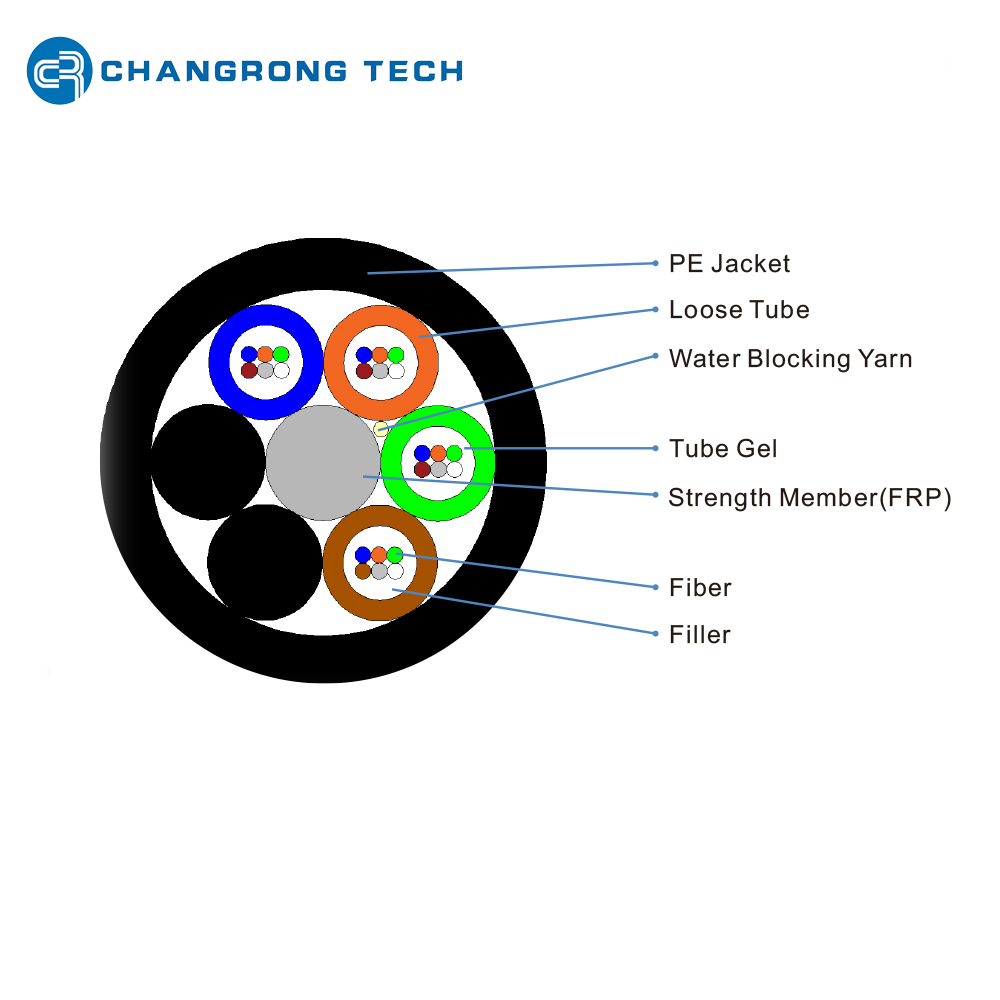
Use these five questions in the design review:
Will capacity be added in phases? If yes, spare microducts and air-blown cable deserve serious consideration.
What is the route condition? Measure duct size, bends, joints, access chambers and future access difficulty.
What protection does the cable need? Underground, building-entry and aerial sections may require different products.
Where does the network transition to the subscriber? The last section may require a dedicated FTTH drop cable solution, not a feeder micro cable.
Who owns installation quality? Define responsibility for duct proofing, cable blowing or pulling, splicing and final OTDR records.
An effective FTTH design can mix methods. For example, a main route may use conventional protected duct cable, a new development may use spare microducts with air-blown distribution cable, and the building connection may use a drop cable designed for the last meter. The better system is the one that keeps each section aligned with its operating conditions.
Do not compare quotes only by fiber count and unit price. Ask for the exact construction, outer diameter, fiber specification, drum length, installation guidance and applicable test data. For air-blown work, include the selected duct size and installation machine in the technical clarification. For pulled cable, state route protection, maximum permitted tension and the planned pulling method.
CROFC publishes manufacturing and inspection information through its quality-control page. Procurement teams should still request documentation for the exact cable configuration in their order, particularly if the project specifies a fiber type, sheath behavior, labeling or delivery length.
Air-blown fiber is usually stronger for flexible, expandable FTTH routes with a well-designed microduct system. Traditional pulled cable is often stronger where conventional protection, known routes and one-time capacity installation lead the design. The choice is not binary across the whole network. Map the FTTH route section by section, then ask CROFC for product guidance that reflects the actual pathway and fiber plan.
Reliability depends on the selected cable, correct installation and protection of the route. Air blowing changes installation mechanics; it does not eliminate normal quality controls.
No. Existing ducts must be assessed for internal diameter, cleanliness, continuity, bends and compatibility with the cable and equipment.
The answer depends on civil work, route access and future expansion. Evaluate first-stage and later-stage costs together.
Yes. Many FTTH projects use different cable types for different route sections.
Provide a route drawing, duct details, required fiber count, fiber type, installation environment and estimated project stages.


