English

Views: 0 Author: Site Editor Publish Time: 2026-06-17 Origin: Site
The difference between indoor and outdoor FTTH drop cable usually becomes clear during installation, not in a product list. A cable that fits neatly inside an apartment corridor may fail on a short aerial span, while a stronger outdoor cable can be too stiff or bulky for indoor terminal boxes. Choosing the right reliable FTTH Drop Fiber Optic Cable starts with the actual route: where the cable is fixed, bent, pulled, exposed, and terminated. This article helps compare indoor and outdoor types, understand mixed-route risks, and avoid cable damage or rework before installation begins.
Indoor installation usually covers the section after the cable enters a building. Typical applications include apartment corridors, wall outlets, indoor conduits, office buildings, risers, and short connections between the terminal box and ONT.
The main requirement for indoor drop cable is not maximum mechanical protection but compatibility with the building environment. A suitable cable should be easy to route through narrow spaces, handle corners without excessive stress, and fit properly inside terminal boxes or wall-mounted access points.
Using a heavier outdoor cable indoors may provide unnecessary protection while making installation more difficult. A stiffer structure can increase routing difficulty, occupy more space, and create challenges during termination.
Outdoor routes create different challenges because the cable must withstand conditions beyond a controlled building environment. Common outdoor scenarios include pole-to-building spans, façade installations, exterior wall fixing, and connections from outdoor distribution boxes to customer premises.
These applications require stronger tensile support and more reliable fixing methods. During installation, the cable may experience pulling forces, wind movement, temperature changes, and mechanical stress from mounting hardware.
For aerial installation, a standard indoor cable is generally unsuitable because it does not provide the necessary support structure. Outdoor FTTH drop cables may include messenger wires, steel reinforcement, or self-supporting designs that allow the cable to remain stable between support points.
Many real FTTH deployments include both outdoor and indoor sections. A typical route may start at an optical distribution point, continue through an aerial or exterior section, enter the building, and finally connect to an indoor terminal or ONT.
These mixed routes often create selection problems because the cable environment changes along the path. A cable that performs well outdoors may be difficult to install indoors, while a compact indoor cable may not survive the exposed section.
Before installation, contractors should confirm:
● Where the outdoor section ends
● Whether a transition point is required
● How the cable enters the building
● Whether clamps and terminal boxes match the cable structure
● Whether the bend radius can be maintained
Planning the transition between outdoor and indoor sections helps avoid replacement work after installation.
Installation route |
Typical use case |
Cable choice priority |
Main installation risk |
What to confirm before ordering |
Indoor-only route |
Apartments, corridors, offices, wall outlets, short ONT-side runs |
Compact size, bend handling, easy stripping, indoor sheath |
Tight bends, poor box fit, messy routing |
Cable size, sheath type, bend radius, terminal box compatibility |
Outdoor exposed route |
Pole-to-building spans, façade routing, exterior wall fixing |
Tensile support, weather exposure resistance, secure anchoring |
Sag, pulling stress, water entry, weak fixing points |
Span distance, support method, messenger wire, clamp compatibility |
Mixed outdoor-to-indoor route |
Outdoor access section followed by indoor terminal or ONT connection |
Smooth transition between outdoor strength and indoor handling |
Wrong cable used for one section of the route |
Wall entry point, transition method, bend path, appearance, box space |
Duct or semi-protected route |
Conduit pulling, short underground or mechanically exposed sections |
Pulling resistance, crush resistance, conduit fit |
Pulling friction, tight conduit bends, cable compression |
Conduit size, pulling path, protection level, cable stiffness |
Indoor bow-type and flat drop cables are widely used for subscriber-side FTTH connections because they provide a practical balance between size, flexibility, and installation convenience.
Their compact structure allows installers to route cables through residential walls, corridors, and small indoor spaces without requiring large pathways. The simple design also makes stripping and fiber termination easier during installation.
The main advantage of these cables is installation efficiency. They are designed for environments where cable appearance, routing flexibility, and compatibility with indoor equipment are important.
Some indoor projects require stronger mechanical performance than a standard indoor drop cable can provide. Reinforced indoor structures are useful when the cable may experience additional pulling force during installation or needs improved resistance against compression.
CROFC Indoor 2-GJXH FTTH Double-Fly Fiber Drop Cable uses a double-fly structure with 1, 2, or 4 core options, G652D/G657A1/G657A2 fiber choices, steel wire or FRP strength members, LSZH sheath, and a 2.0×6.0 mm cable size.
The value of this type of structure is not only the additional reinforcement. It also influences practical installation factors such as cable handling, stripping, splicing efficiency, and compatibility with indoor connection points. A reinforced indoor cable should still be selected according to the actual route rather than simply choosing the strongest available design.
Self-supporting aerial drop cables are designed for outdoor last-span connections where the cable must travel between poles, buildings, or exterior mounting points.
The most important consideration is the support structure. Unlike indoor cables, aerial drop cables must handle their own weight and environmental forces after installation. The cable design should match the expected span distance, fixing method, and local conditions. For exposed spans, an FTTH Drop Fiber Optic Cable is usually more suitable than a compact indoor cable because the support structure must handle tension, sag, and exterior fixing conditions.
Key factors to check include:
● Messenger wire or integrated support structure
● Tensile performance
● Strength member material
● Cable weight
● Sag control requirements
● Mounting accessories
CROFC Outdoor 2-GJYXCH FTTH Double-Fly Fiber Drop Cable is an example of an outdoor-oriented structure. It provides 1, 2, and 4 core options, supports G652D/G657A1/G657A2 fiber types, and uses galvanized steel wire as a messenger component with steel wire or FRP reinforcement.
The purpose of these structural features is to support reliable outdoor deployment rather than simply increase cable strength. The cable still needs to match the installation method and surrounding hardware.
Outdoor installation does not always mean long aerial spans. Many residential FTTH projects include short exterior wall sections before the cable enters a building.
Installers should avoid placing excessive pressure on the cable during fixing. Tight bends near wall openings are also a common cause of future signal problems.
Appearance is another practical consideration. Since the cable may remain visible on building surfaces, the installation should balance protection with a clean and acceptable appearance.
Some outdoor routes use ducts or protective pathways instead of aerial installation. In these cases, the cable selection should consider pulling conditions, conduit space, moisture protection, and possible mechanical pressure.
A cable used in a duct environment may face different stress compared with an aerial cable. Pulling force, tight conduit bends, and repeated maintenance access can affect long-term reliability.
For locations with higher mechanical risks, a more protective structure may be appropriate. However, additional protection should be selected based on actual conditions rather than added automatically, because heavier structures can increase cost and reduce installation flexibility.
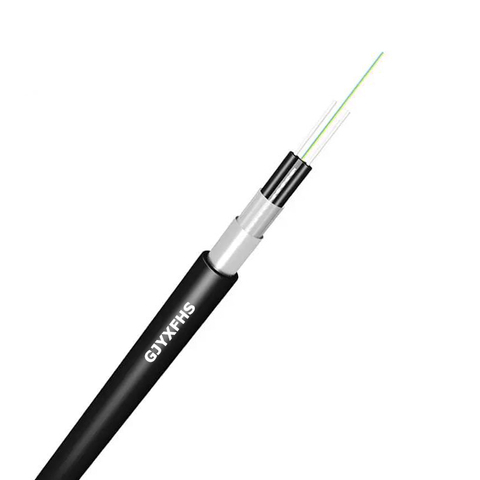
A successful FTTH installation begins before the cable is installed. Route planning determines whether the selected cable structure matches the real application.
Many installation problems come from incomplete planning rather than poor cable quality. A cable may meet technical specifications but still fail to perform well if it does not match the actual installation environment.
Fiber cables are designed for reliable transmission, but improper handling can introduce attenuation or physical damage. Using a bend-resistant FTTH Drop Fiber Optic Cable can also help reduce installation issues in routes with tight corners, wall entries, or limited routing space.
For indoor installation:
● Avoid sharp bends around corners.
● Do not tighten clips or cable ties excessively.
● Keep routing paths organized.
● Protect cable entry points.
For outdoor installation:
● Allow the support element to carry the mechanical load.
● Control pulling force during deployment.
● Maintain proper cable support.
● Prevent twisting during installation.
The cable structure and installation method must work together. Even a strong outdoor cable can be damaged if it is installed with excessive tension or incorrect fixing methods.
The connection method also affects installation reliability. FTTH drop cables may use fusion splicing, field-installed connectors, or pre-terminated solutions depending on project requirements.
Connector contamination is one of the common causes of optical performance problems. Proper cleaning and inspection procedures should be part of every installation process.
Testing confirms whether the installed cable system can provide stable optical performance before service activation.
Common checks include:
● Visual inspection
● Continuity testing
● Optical power measurement
● OTDR testing when required
Testing helps identify problems caused by excessive bending, pulling damage, poor termination, or contaminated connectors. Detecting these issues before network activation reduces future maintenance work.
Indoor cable is generally suitable when the entire route remains inside a building and the main priorities are compact routing and easy installation.
Choose indoor cable when:
● The route stays inside residential or commercial buildings.
● Space is limited.
● Clean appearance is important.
● The cable needs to fit indoor boxes or conduits.
● Indoor sheath requirements such as LSZH are needed.
The focus should be on installation convenience and compatibility with indoor infrastructure.
Outdoor cable should be selected when the route includes exposed sections or requires additional mechanical support.
Choose outdoor cable when:
● The cable crosses an aerial span.
● The route is fixed on exterior walls.
● Messenger support is required.
● Higher tensile resistance is needed.
● Outdoor mounting hardware is involved.
The cable structure should match the environmental conditions rather than simply the final connection location.
A clear specification helps suppliers provide suitable options and reduces quotation differences.
Important RFQ details include:
● Installation route: indoor, outdoor, aerial, wall-mounted, duct, or mixed
● Fiber count and fiber type
● Cable structure and size
● Strength member or messenger requirement
● Jacket requirements
● Minimum bend radius
● Termination method
● Reel length and packaging
● Compatible accessories
CROFC FTTH Drop Cable product range includes different structures such as GJYXCH, GJYXFCH, GJXH, GJXFH, and related drop cable designs for different deployment conditions.
A simple selection process can be summarized as:
Route → Structure → Fiber Type → Hardware Fit → Termination → Testing
Choosing between indoor and outdoor drop cable becomes easier when the route is defined first. Indoor paths need compact handling, clean termination, and box compatibility, while outdoor spans and façade sections require stronger support, controlled tension, and better protection during installation. For mixed routes, the transition point often decides whether the cable performs reliably or creates rework later.
Anhui Changrong Optical Fiber & Cable Technology Co., Ltd. offers FTTH Drop Fiber Optic Cable options for different last-mile conditions, helping buyers match cable structure, fiber type, sheath, and accessories to the real installation environment.
A: Indoor drop cable focuses on compact routing, flexibility, and indoor safety requirements. Outdoor drop cable needs stronger support, better weather resistance, and suitable anchoring for exposed routes.
A: Usually no. Indoor cable is not designed for UV exposure, moisture, aerial tension, or outdoor fixing stress. Use outdoor-rated cable when any exposed section is involved.
A: Start with the route. Check whether the cable is indoor, outdoor, aerial, wall-mounted, ducted, or mixed, then confirm fiber type, strength member, sheath, and hardware fit.
A: Tight bends can increase optical loss or damage the fiber. Installers should follow the cable’s specified bend radius, especially near corners, wall entries, and terminal boxes.
A: Confirm span distance, support method, pulling tension, clamp compatibility, wall entry protection, and exposure conditions. These details help prevent sagging, stress damage, and future service issues.
A: Pre-terminated cable can speed up installation and reduce field splicing work. Splicing is still useful when route length, box layout, or project conditions require on-site adjustment.


